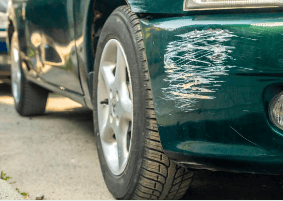
Many drivers wonder: if a bumper gets damaged (cracked, dented, or scratched), do you always need to replace it? The good news is: in many cases you can fix a bumper without replacing it. Whether repair is feasible depends on the severity and type of damage.
Below, we break down when a repair works, when replacement is the safer bet, what repair might cost, and what you should know before you decide.
When Can You Repair a Bumper (Instead of Replacing It)?
You can often repair a bumper when the damage is cosmetic rather than structural. Modern plastic bumpers are designed to absorb minor impacts, which means many everyday bumps and scrapes don’t require a full replacement. In general, repair is a good option when:
- Damage is minor and limited to the surface, such as small dents, superficial cracks, light scuffs, or shallow scratches.
- Paint damage doesn’t extend into deeper layers and the bumper’s underlying structure remains intact.
- The bumper is deformed but not broken—for example, a pushed-in corner or modest dent that can be reshaped through heat, suction, etc.
- The impact occurred at low speed, and there’s no damage to mounting points, reinforcement bars, or safety components behind the bumper.
For example:
A shallow dent from a parking mishap or a scrape from brushing against a curb can often be repaired quickly and affordably. As long as the bumper still aligns correctly and the structural supports are undamaged, repair is typically a safe and cost-effective choice.
5 Common Methods for Professional Bumper Repair (Without Replacement)
Professional bumper repair focuses on restoring the bumper’s structure, shape, and appearance without compromising safety. Depending on the type of damage, shops typically use one or more of the following methods:
1. Heat Reshaping (for dents and pushed-in areas)
Plastic bumpers are designed to flex, which means dents from low-speed impacts can often be repaired. Technicians apply controlled heat to soften the plastic, then gently push or massage the dent back into shape from behind the bumper.
Best for:
- Shallow dents
- Pushed-in corners
- Deformations where paint is still intact
Limitations:
- Cannot repair dents with cracked or creased paint
- Not effective if the plastic has torn or split
2. Plastic Welding (for cracks, splits, and broken tabs)
When a bumper has cracks or splits, shops often use plastic welding rather than adhesives. This method melts and fuses compatible plastic rods into the bumper to restore its structural integrity.
Best for:
- Cracks and splits
- Damaged mounting tabs
- Breaks that need structural reinforcement
Limitations:
- Requires repainting afterward
- Not suitable for severe or widespread structural damage
Note: Plastic welding is generally stronger and longer-lasting than adhesive-only repairs.
3. Filler, Sanding & Surface Refinishing (for gouges and deep scratches)
For surface damage, technicians use flexible plastic filler to rebuild missing material and restore smoothness. After shaping and sanding, the area is prepped for primer and paint.
Best for:
- Deep scratches
- Gashes
- Imperfections left after welding
Limitations:
- Requires painting
- Not suitable for damaged areas that need structural strength
4. Scratch & Scuff Repair (for minor surface damage)
Light scratches, paint scuffs, and superficial abrasions can often be removed without major repair work. Shops may sand, buff, or spot-paint the affected area to restore the finish.
Best for:
- Cosmetic-only damage
- Paint transfer
- Shallow surface marks
Limitations:
- Does not fix dents or cracks
- Only works when the underlying plastic is intact
5. Bumper Realignment & Tab Repair (for loose or misaligned bumpers)
Low-impact collisions can shift the bumper out of alignment or break the clips and tabs that hold it in place. Technicians realign the bumper and replace or repair any broken mounting hardware.
Best for:
- Loose or sagging bumpers
- Minor impact misalignment
- Damaged clips or tabs
Limitations:
- Does not address cracks, dents, or paint issues
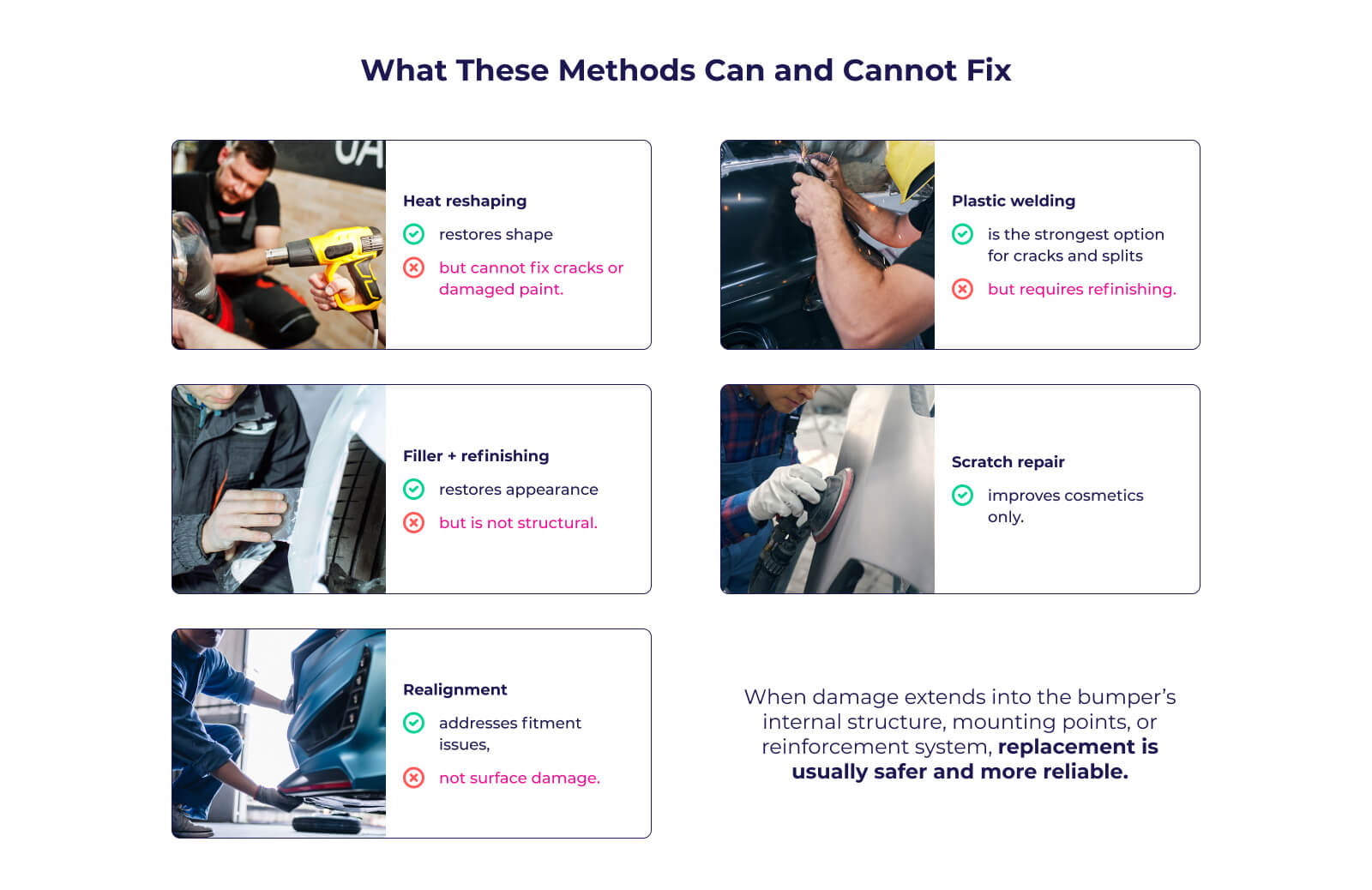
What These Methods Can and Cannot Fix
- Heat reshaping restores shape but cannot fix cracks or damaged paint.
- Plastic welding is the strongest option for cracks and splits but requires refinishing.
- Filler + refinishing restores appearance but is not structural.
- Scratch repair improves cosmetics only.
- Realignment addresses fitment issues, not surface damage.
When damage extends into the bumper’s internal structure, mounting points, or reinforcement system, replacement is usually safer and more reliable.
In Addition to Repair Capabilities, When You Should Replace the Bumper Instead
Repair is possible in many cases, but replacement is the better choice when the damage affects safety, alignment, or long-term durability.
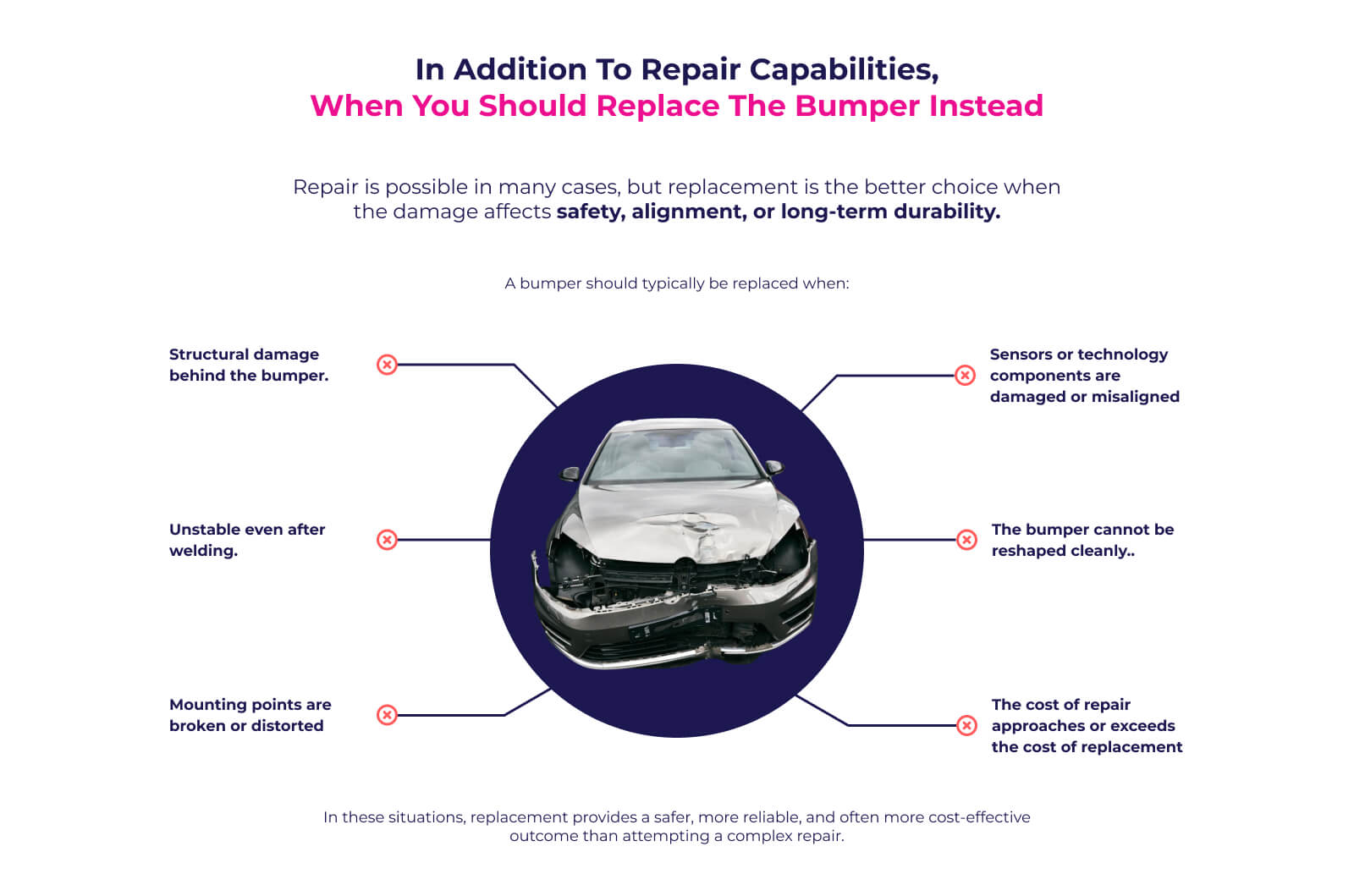
A bumper should typically be replaced when:
- There is structural damage behind the bumper, including reinforcement bars, energy absorbers, or mounting brackets.
- Cracks are severe or widespread, making the bumper unstable even after welding.
- Mounting points are broken or distorted to the point where the bumper cannot sit securely
- Sensors or technology components (e.g., parking sensors, radar systems) are damaged or misaligned.
- The bumper cannot be reshaped cleanly, such as dents with deep creases or deformation that causes ongoing stress to the plastic.
- The cost of repair approaches or exceeds the cost of replacement, especially when extensive refinishing is required.
In these situations, replacement provides a safer, more reliable, and often more cost-effective outcome than attempting a complex repair.

FAQ: Common Questions About Bumper Repair vs. Bumper Replacement
Can all bumper damage be repaired without replacing the bumper?
No. Many types of damage, such as minor dents, scratches, or small cracks can be repaired, but deeper structural cracks, broken mounting points, or damage affecting sensors may require replacement. A technician will evaluate whether repair is safe, effective, and cost-efficient.
Is repairing a cracked bumper as strong as replacing it?
When done correctly, plastic welding can restore much of the bumper’s original strength. However, severe or long cracks, missing plastic, or damage near structural components may compromise durability. In those cases, replacement may be the safer choice.
How long does bumper repair usually take?
Minor surface repairs or dent reshaping may be completed same-day. More complex repairs, such as welding, refinishing, and repainting can take one to three days depending on curing time and paint match requirements.
Will the repaired area match the rest of my vehicle?
Yes. Professional shops use OEM-grade paint-matching systems to blend new paint seamlessly with the original finish. When done properly, the repair should look indistinguishable from the surrounding panels.
Is bumper repair safe after a low-speed collision?
Yes, as long as the reinforcement bar, energy absorbers, and mounting points are intact. A technician will inspect these components to ensure they weren’t affected. If deeper damage is found, replacement may be recommended for safety.
Why Choose StormWise for Bumper Repair in Denver, Colorado
StormWise makes bumper repair straightforward by focusing on what matters most: proper repair, fair cost, and your time.
- Specialized technicians, who understand how to safely reshape, weld, or refinish plastic bumpers based on the type of damage.
- Insurance support including documenting damage, communicating with adjusters, and filing supplements so the proper repair gets approved.
- Clear explanations of when repair saves money, when replacement is more practical, and whether filing a claim is worthwhile.
- High-quality refinishing with precise paint matching for a seamless result.
- Plus a lifetime warranty on paint repairs for long-term peace of mind.
If you’re in Denver and need bumper repair, contact StormWise today. We’ll assess the damage, walk you through your best options, and help you get the proper repair approved quickly and confidently.